What affects this project
Freeze-thaw cycles, winter inversions, rim-joist leaks, crawl-space moisture, and large unconditioned shops can all change the foam conversation. The contractor needs to know whether the goal is comfort, air sealing, condensation control, sound reduction, code performance, or making a garage, shop, or crawl space more usable.
Details to gather before requesting pricing
Useful details include square footage, framing depth, surface material, existing insulation, access constraints, electrical or mechanical items in the work area, moisture history, photos, and whether other trades are scheduled.
Heber City building notes
Heber City and the surrounding valley keep adding homes, shops, detached garages, rural properties, and remodel projects that need insulation decisions early. That makes clear scheduling, clean prep, and the right foam recommendation more important than a generic insulation quote.
Where open-cell foam works well in a cold-climate home
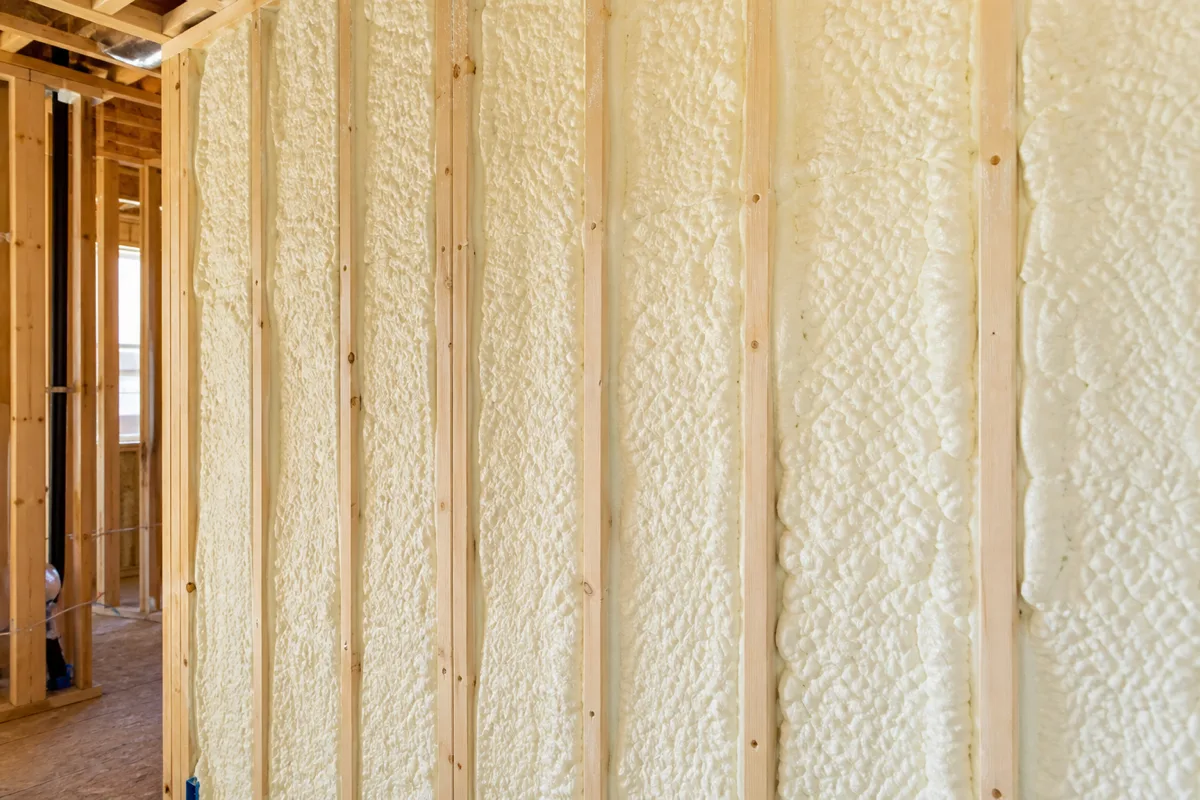
Open-cell foam is lighter, less expensive per board foot than closed-cell, and expands more to fill irregular framing cavities, which makes it a common choice for interior wall assemblies, rooflines, and sound-reduction projects in Heber City homes where the cavity is protected from outside moisture. Because it is vapor-permeable rather than a vapor barrier itself, it is typically paired with the right interior finish and ventilation strategy rather than used in exposed or below-grade assemblies.
New construction and remodel interior walls
New construction in Heber City, Midway, and Daniel often uses open-cell foam in interior partition walls for sound control between bedrooms, home offices, and mechanical rooms, and in cathedral or vaulted rooflines where an air seal matters more than maximum R-value per inch. Remodels that open up interior walls are a common opportunity to add open-cell foam for the same comfort and noise-reduction benefits.
Comfort in a high-elevation climate
Even in protected interior assemblies, air sealing performance matters more at Heber City's elevation than it would in a milder climate, since drafts and temperature swings are more noticeable across a longer, colder heating season. Open-cell foam's air-sealing properties help even out room-to-room temperature differences that are common in valley homes with additions or multiple stories.
When open-cell is the right call
Open-cell foam generally costs less per board foot than closed-cell foam and fills large or irregular cavities more efficiently, which makes it a practical choice for full wall or roofline assemblies in a protected, code-compliant setup with the right interior finish and ventilation. It is not typically used in exposed, below-grade, or high-moisture assemblies such as crawl spaces or rim joists, where closed-cell foam's density and moisture tolerance are usually preferred. Comparing the two side by side on the Closed Cell vs Open Cell Spray Foam page can help clarify which option fits a specific area of a project.
Sound reduction as a secondary benefit
Beyond thermal performance, open-cell foam's density and structure absorb sound more effectively than empty cavities or many traditional insulation materials, which is why it is frequently requested for interior partition walls around home theaters, offices, bedrooms, and mechanical rooms in Heber Valley homes, even when energy performance is not the primary driver of the project.
Fire and ignition-barrier considerations
Like other spray foam products, open-cell foam typically requires an approved ignition barrier or thermal barrier in occupied living space, depending on local code and the specific assembly. This is worth confirming with a contractor as part of the scope discussion, especially in remodeled or converted spaces such as a finished attic or basement in a Heber City home.