Wasatch County's building boom
Heber City, Midway, and Daniel have all seen sustained new home and shop construction as Wasatch County has grown, with new subdivisions, custom home lots, and detached shop and barn buildings going up across the valley. That pace of building means insulation decisions on a new project often have to fit into a tight framing-to-drywall schedule set by the general contractor.
Why the framing stage is the best time to plan foam
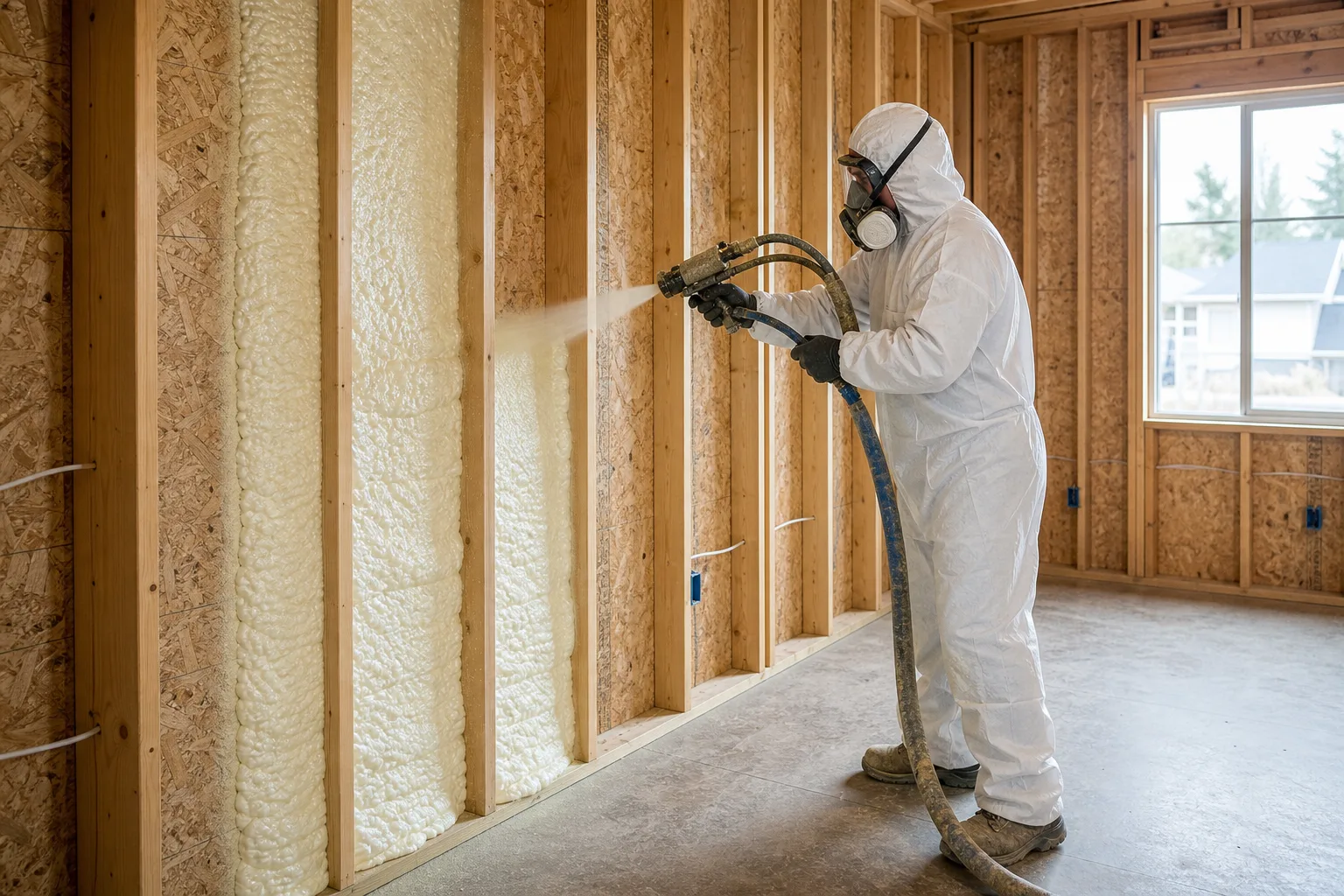
Spray foam is far easier and less expensive to install correctly during new construction than to retrofit later, since walls, rooflines, and rim joists are fully open and accessible before insulation and drywall subcontractors move in. Getting a foam quote and plan in place early in the build, rather than after framing is complete, gives more flexibility around foam type, coverage depth, and any ignition-barrier or code requirements that need to be addressed before the space is closed in.
Coordinating with the build schedule
New construction insulation has to work around the framing, electrical, plumbing, and mechanical trades that come before it and the drywall crew that comes after, so clear communication about the project timeline matters as much as the insulation specification itself. Builders and owner-builders working on a Heber City, Midway, or Daniel project should be ready to share the framing schedule, any energy code requirements from the local building department, and architectural details when requesting information.
New homes, shops, and barndominiums
New construction in Wasatch County isn't limited to standard subdivision homes. Custom homes on larger rural lots, detached shops and pole barns, and barndominium-style buildings that combine a shop with living space are all common new-construction insulation projects here, each with its own framing and use considerations. See Pole Barns, Shops, and Garages for more on insulating detached buildings during construction.
Elevation and climate planning for new builds
Because Heber City sits above 5,600 feet with a long, cold heating season, new construction here often benefits from a more air-sealing-focused foam plan than a comparable build at lower elevation. Builders who plan for that from the framing stage typically avoid the callbacks and comfort complaints that come from an under-sealed building envelope discovered only after the first hard winter.